
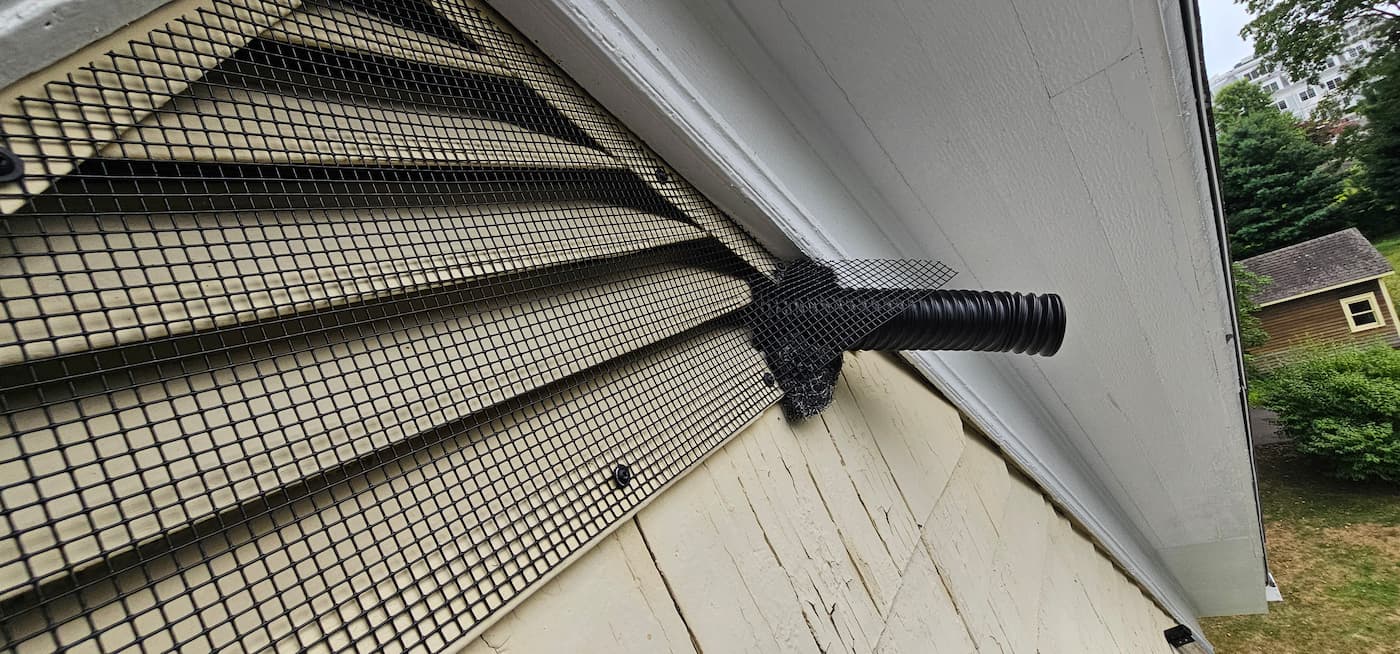
If you’ve discovered bats in your attic, soffits, or walls, you may assume the solution is simple trapping or removal. In reality, professional bat control in Connecticut relies on a much more effective and humane process called bat exclusion. One of the most important tools used during this process is a one-way exclusion door.
At Soundview Wildlife Control, humane bat exclusion is a core part of protecting homes throughout Connecticut’s shoreline communities, including Madison, Guilford, Branford, Clinton, Westbrook, Old Saybrook, and surrounding towns.
What Is a One-Way Bat Door?
A one-way bat door is a specialized exclusion device installed over an active bat entry point. The device allows bats to safely leave the home during their normal nighttime feeding cycle, but it prevents them from getting back inside.
Bats naturally leave their roost at dusk to hunt insects. Once outside, the one-way device blocks re-entry, gradually removing the colony from the structure over several nights.
Professional wildlife control companies may use:
- Bat cones
- Exclusion tubes
- Flexible screening systems
- Custom one-way netting systems
The goal is always the same: allow bats to leave safely while permanently preventing them from returning.
Why Humane Bat Exclusion Is Used Instead of Trapping
Professional wildlife control companies in Connecticut typically avoid trapping-based bat removal because trapping alone rarely solves the root problem. Bats are highly skilled at returning to familiar roosting sites, especially attics and roofline voids. If the structure itself is not sealed correctly, new bats can quickly move back in.
At Soundview Wildlife Control, the focus is on exclusion and prevention whenever possible rather than simple removal.
Humane exclusion methods are preferred because they:
- Remove the entire colony naturally
- Prevent bats from becoming trapped inside walls
- Reduce the risk of recurring infestations
- Protect local bat populations
- Provide a longer-lasting solution
Wildlife professionals throughout Connecticut commonly use one-way exclusion devices as part of full-structure bat exclusion work.
Why Sealing Entry Points Is Critical
Installing a one-way door is only one step in the bat exclusion process. Bats can squeeze through openings as small as 3/8 of an inch, making a detailed inspection extremely important.
Common bat entry areas include:
- Roofline gaps
- Ridge vents
- Fascia boards
- Soffits
- Chimney flashing
- Construction gaps
- Attic vents
If secondary openings are not sealed properly, bats may simply relocate to another area of the home.
Professional bat exclusion services typically include:
- Full exterior inspection
- Identification of active entry points
- Sealing secondary gaps
- Installation of one-way exclusion devices
- Monitoring bat activity
- Permanent closure of primary entry points
This exclusion-focused approach creates a long-term solution instead of a temporary fix.
Why Timing Matters for Bat Removal in Connecticut
Bat exclusion cannot always be performed year-round. Connecticut has seasonal regulations and wildlife guidelines designed to protect bats during maternity season, when young bats are unable to fly.
Attempting exclusion during the wrong time of year can trap flightless pups inside walls or attics, creating serious odor, sanitation, and animal welfare issues.
Homeowners across Connecticut frequently search for answers about bat exclusion timing and legality because bats are protected wildlife in many situations.
Professional wildlife control companies understand:
- Seasonal bat behavior
- Connecticut wildlife regulations
- Proper exclusion timing
- Humane removal standards
This is one reason DIY bat removal often fails.
Signs You May Have Bats in Your Connecticut Home
Many homeowners first notice a bat problem after hearing unusual sounds or noticing strange odors.
Common signs include:
- Scratching or fluttering noises at night
- Chirping sounds in attic spaces
- Bat droppings near siding or vents
- Strong ammonia-like odors
- Staining near rooflines
- Bats flying near the roof at dusk
Because shoreline homes in Connecticut often have aging rooflines, soffits, and attic ventilation systems, bats can sometimes enter through very small construction gaps.
Why DIY Bat Removal Often Makes the Problem Worse
Many homeowners attempt to seal visible holes immediately after spotting bat activity. Unfortunately, sealing an active entry point too early can trap bats inside the home.
DIY bat removal can lead to:
- Dead bats inside walls
- Strong odors
- Increased contamination
- Bats entering living spaces
- Larger infestations later
Professional wildlife exclusion focuses on identifying the entire access system rather than only the visible opening.
Community discussions online often reinforce that exclusion — not repellents or temporary fixes — is the only proven long-term solution for bat problems.
Long-Term Bat Protection for Connecticut Homes
One-way exclusion doors remain one of the most effective and humane tools used in professional bat removal. When combined with full-structure sealing and proper exclusion work, they provide homeowners with a safe, long-term solution to bat infestations.
Soundview Wildlife Control specializes in humane wildlife control and bat exclusion services throughout southern Connecticut, helping homeowners safely remove bats while protecting homes against future infestations.
If you hear scratching in your attic, notice bats near your roofline at dusk, or suspect wildlife activity inside your home, scheduling a professional inspection is the safest way to identify entry points and prevent long-term damage.